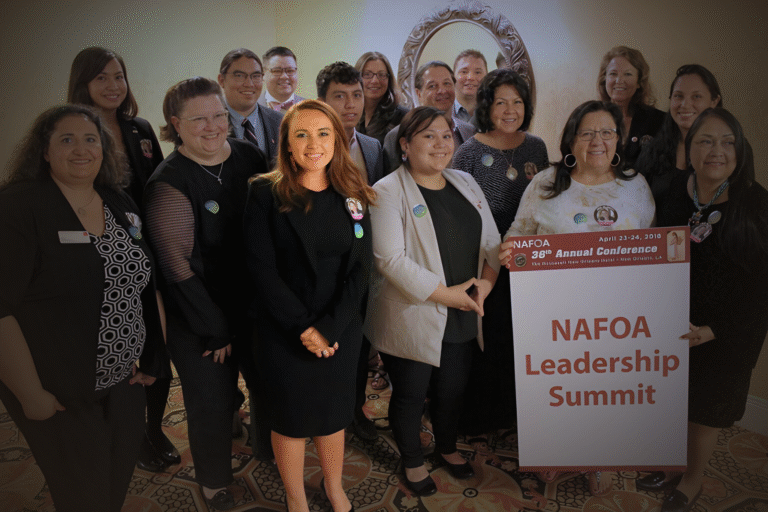
This piece was originally published in the Fall 2025 Edition of the NAFOA Navigator.
The NMTC program has been a valuable tool for our Tribe. I look forward to using the NMTC program to fund future projects.
Chairman Jarred-Michael Erickson, Confederated Tribes of the Colville Reservation
The Confederated Tribes of the Colville Reservation are using New Markets Tax Credits (NMTCs) to fund a continuous cycle of community development that bolsters health and well-being, early education, and career development for the tribal community. Colville Chief Financial Officer Billy Nicholson shared insights on leveraging this financing tool and advocating for its expansion in Indian Country.
Projects and Impact
The Colville Tribes’ NMTC journey began from necessity when their old government center burned down. “We had to be relocated, and we started trying to figure out how to get this project built,” says Nicholson. During this period, Nicholson connected with Travois, a firm focused on Native housing and economic development, at a NAFOA conference, forming a crucial relationship that jump-started his understanding of NMTCs and operationalizing their potential.
The Process
Nicholson learned that once a Tribe identifies a project as a prospective NMTC deal, the Tribe must pitch that project to a Community Development Entity (CDE) through a competitive process demonstrating project viability and community impact. If the project is selected, the CDE acts as an intermediary, partnering with investors to allocate the NMTCs. Nicholson regards CDEs as “very patient, very willing to teach,” and highly focused on project success. He says CDEs typically prioritize projects with high community benefit—such as treatment centers or clinics—improving quality of life and creating living-wage jobs.
New Market Tax Credits can provide a net benefit up to 20% of project costs, and Nicholson cautions Tribes to secure additional funding sources upfront. For the now-complete Lucy F. Covington Government Center, Colville secured a traditional loan before adding NMTCs to their capital stack. Significant funding from the Cobell v. Salazar settlement allowed the Tribes to pay contractors upfront and get reimbursed by their NMTC bank at the end of construction, but later projects required the Tribe to get reimbursed on a monthly basis.
The government center has been Colville’s largest NMTC project to date, but it hasn’t been the only one. The San Poil Treatment Center, a brand-new facility, created new, certified, and higher-paying professional jobs while addressing a critical community need. Leveraging state and ARPA funds in conjunction with NMTCs, the treatment center came in under budget. The Tribe reallocated the excess for professional housing for incoming workers. Any housing not used to accommodate staff was made available to community members, addressing the Tribe’s larger housing shortfall. With so many benefits, the treatment center received widespread support. Travois reaffirmed that the center was likely to score high as an NMTC project, and the pitch received an enthusiastic reception by CDEs.
Additional NMTC projects include a deal proactively brokered by Travois with US Bank to expand the Omak Head Start facility, adding classrooms for early learners. Colville is also using NMTCs to finalize the Omak Clinic, a boon for job creation expected to grow the workforce from six to 120 higher-paying, medical professional positions.
NMTCs have enabled Colville to complete several projects in a virtually continuous development cycle. “You don’t get to say this very often,” Nicholson beams, “but if you built a $100,000 house and had an extra $20,000, what are you going to do to make that property, that home, better? That’s what this is allowing us to do.”
Navigating the NMTC Landscape: Insights to Ease the Learning Curve
Nicholson advises patience and persistence when considering NMTCs, noting that they’re more intricate than standard loans and can require a six-month runway. Colville’s process involved identifying projects aligned with community needs and Tribal leadership priorities, organizing their capital stack, and finally galvanizing a pre-assembled team of consultants, accountants, and attorneys.
Pro-Tip:
Colville learned from their first NMTC project that early involvement of the NMTC owner’s representative is crucial. After getting started, Nicholson and his team discovered that all contractors and subcontractors on an NMTC project must hold individual lien waivers, rather than operating under the general contractor’s documentation. Securing the proper insurance can slow progress, but compliance is mandatory. If Colville had brought the owner’s rep in earlier, they could have communicated this requirement and mitigated reimbursement delays from the NMTC bank. Learning from experience, Colville now communicates the subcontractor lien waiver requirement upfront and works closely with the owner’s rep to secure the waivers.
Making the Case for NMTCs
Nicholson passionately advocates for policymakers to acknowledge the positive impact of NMTCs in Tribal communities. Nicholson estimates that Colville’s net benefit will exceed $20M after the Omak clinic is complete, and cites outsized job creation for both Tribal and non-tribal members and improved community quality of life as clear indicators of success and ROI. “We’ve now had the net benefit of these four projects that allow us to go on to the next, and I think it’s just going to keep enhancing our communities,” he says. Upcoming projects include enhancing emergency EMS services, Boys and Girls Clubs, wellness centers, a longhouse project, and Senior Meal Sites.
Sustaining Growth and Engaging the Next Generation
Nicholson’s career began right out of college, when he worked as a loan officer for the Tribe. He later advanced to budget and finance officer, then small business director, and served four years on Tribal Council before becoming CFO. “Both my parents worked on the federal side for the BIA, and they always encouraged me to come home,” he says. “I couldn’t wait to get started when I got out of school and always found a lot of pride in getting things done at home on the reservation.” Now, Nicholson’s work, including multiple successful NMTC projects, contributes to new career pathways that today’s Colville youth can leverage for similar career trajectories. “I share with them my experience and how much fun I have with what I do,” says Nicholson. “Getting our youth to come home has always been a goal of mine.”
A Model for Utilizing NMTCs in Indian Country
The Confederated Tribes of the Colville Reservation show how New Markets Tax Credits, strategic financial planning, and strong leadership can create lasting change. Their example is a powerful model for other Tribal nations that want to promote ongoing community growth and see real improvements in quality of life.
AUTHOR
Amber Richardson (Haliwa-Saponi Indian Tribe)
Amber Richardson is a contributing writer for NAFOA. Amber is a dedicated advocate and communications strategist with a deep commitment to advancing opportunities for Indigenous and historically marginalized communities.