1. STORIES:
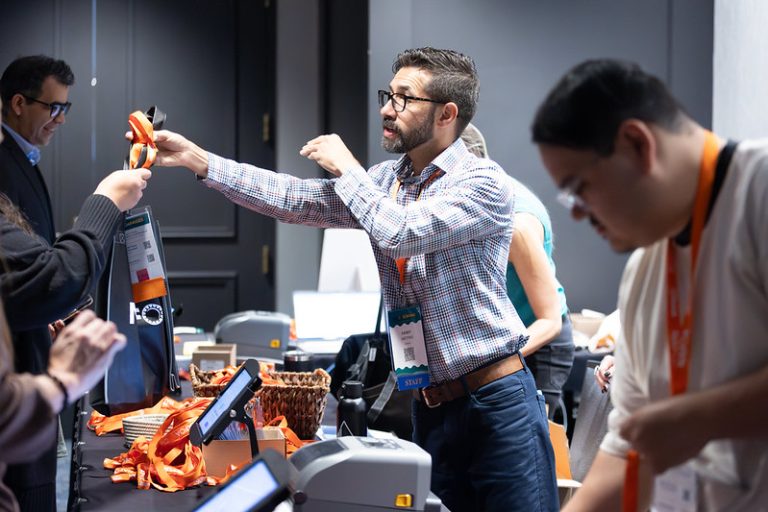
Interview with Jessica Bradby, Leadership Summit Alum and Alumni Committee Member
Jessica Bradby (Pamunkey Indian Tribe) is part of the second class of NAFOA Leadership Summit (2018) and a founding member of NAFOA’s Summit Alumni Committee. Before her Tribe achieved federal acknowledgment, Bradby had limited access to resources and networks that could satisfy her curiosity about Tribal affairs and community development. When Pamunkey gained federal recognition in 2016, Bradby took advantage of every opportunity to learn how her Tribe could leverage its status and assert its sovereignty toward the betterment of her community. This exploration led Bradby to NAFOA, where she began cultivating a flourishing professional network that is already positively impacting her career trajectory and professional contributions to her Tribe.
In this Q&A, Bradby shares how curiosity as a core principle is guiding her to design networks and services that transform her community.
2. WEBINAR:
How to Tell Governments What You Think
Wednesday, December 17, 2025 at 12:00 PM ET
Because governments work for the people, it’s important for government officials to hear from ordinary citizens what we think about what they are doing. Yet most of us don’t know how to effectively share our opinions with governments. Join the Aspen Institute to learn how to tell government actors across all branches of government what you think about their ideas. This program will teach you broad principles for communicating to policymakers, as well as specific tips for sharing your opinions with Congress, executive branch officials, and even the courts. The training will also feature 2 alumni guest speakers, sharing their real-world examples of policy proposals for governments.
Source: Aspen Institute
3. ACCOUNTING:
GASB Launches Survey on the Phrase Continue as a Going Concern
The Governmental Accounting Standards Board (GASB) recently issued the Preliminary Views, Severe Financial Stress and Probable Dissolution Disclosures. These disclosures would replace the existing disclosures related to going concern in Statement No. 56, Codification of Accounting and Financial Reporting Guidance Contained in the AICPA Statements on Auditing Standards.
The purpose of this survey is to gain a broader understanding of stakeholder interpretations of the term “going concern” to help the Board in this stage of deliberations prior to the issuance of the next due process document, an Exposure Draft.
The survey will be open through December 19, 2025.
Source: Governmental Accounting Standards Board
4. MUST READ:
Research collaborations propel economic data in Indian Country
As Executive Director of Four Bands Community Fund, a Native Community Development Financial Institution (CDFI) serving residents of the Cheyenne River Sioux Reservation in South Dakota, Lakota Vogel (Cheyenne River Sioux Tribe) sees hundreds of clients every year. Often, these prospective borrowers report very low financial net worth.
“We sit on a lot of paper information about wealth,” Vogel said. “We were noticing conversations about the racial wealth gap, and as a practitioner, when I see 400 Native American clients come through in a year and fill out a personal finance statement reporting net worth at the bottom level, it seems silly for me not to want to report that somewhere.”
In this article, the Center for Indian Country Development marks its tenth anniversary by exploring new ways Native leaders, practitioners, and researchers are working together to address long-standing data gaps.
Source: Center for Indian Country Development, Federal Reserve Bank of Minneapolis
5. JOB OPPORTUNITY:
FMYNE General Manager, Fort McDowell Enterprises
The Enterprise General Manager is the key intermediary between the Tribal Council and Enterprise Business Managers. This position is critical in ensuring business managers effectively communicate and implement the nation’s strategic vision and goals. The Enterprise General Manager facilitates collaboration, addresses concerns, and ensures that the enterprise’s operational activities are aligned with the Tribal Council’s expectations.