1. POLICY:
Overview of the Tribal Tax and Investment Reform Act of 2026
The Tribal Tax and Investment Reform Act has been introduced in both chambers with strong alignment — 10 of the Senate’s 13 provisions are substantively identical to their House counterparts, covering core priorities including full governmental plan parity for Tribal pension and retirement plans, a permanent and enhanced Indian Employment Tax Credit (raising the per-employee wage limit from $20,000 to $30,000), a dedicated $175 million annual New Markets Tax Credit allocation for tribal area investments, inclusion of Indian areas as Difficult Development Areas for the Low-Income Housing Tax Credit, Tribal charities and foundations treated equivalently to other government-sponsored entities, and income exclusions for IHS loan repayment and scholarship recipients.
The most substantive structural difference between the two versions is in Section 3’s Alaska Native bond authority: the Senate creates Alaska Native Corporation Economic Development Bonds under a corporate governance framework with a $45 million national cap, while the House instead establishes Alaska Native Intertribal Consortium Tax-Exempt Bonds with a broader consortium model that specifically enumerates eligible regional nonprofits.
Continue Reading the Policy Alert →
2. CONFERENCE:
Spotlight on Tribal Energy: Financing, Development & Real-World Lessons
Attendees at #NAFOA2026 will have the opportunity to dive deeper into the financial and strategic foundations of Tribal energy development through a series of focused sessions. Experts in energy development, finance, and operations will share practical guidance on preparing projects for successful underwriting, building strong financial models, and securing the right capital partners. You’ll also hear firsthand perspectives from Native finance leaders who are actively investing in projects that strengthen Tribal economies and advance energy sovereignty.
- Underwriting Tribal Energy Projects (General Session Monday, April 27th)
- Lessons from the Field in Tribal Energy Development (General Session Tuesday, April 28th)
- Energy Project Finance Fundamentals (Breakout Session Tuesday, April 28th)
3. NAFOA NEWS:
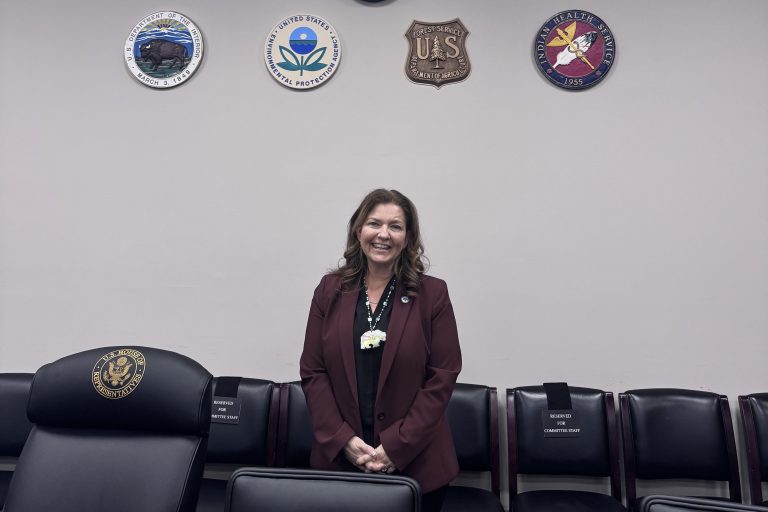
NAFOA to Testify Before the House Appropriations Subcommittee on Interior, Environment, And Related Agencies for their American Indian and Alaska Native Public Witness Hearings
This Wednesday, March 18th, at 3:45 p.m. Eastern, NAFOA Executive Director Cory Blankenship is scheduled to testify before the House Committee on Appropriations, Subcommittee on Interior, Environment, and Related Agencies for thir Fiscal Year 2027 American Indian and Alaska Native Public Witness Days. The hearings are on Tuesday, March 17, and Wednesday, March 18, 2026:
- Day 1, Morning Session
- Day 1, Afternoon Session
- Day 2, Morning Session
- Day 2, Afternoon Session
NAFOA’s testimony will emphasize treaty and trust obligations, matters pertaining to Tribal economic development, the achievements of the Treasury Tribal Advisory Committee (TTAC), and the Tribal Tax and Investment Reform Act (TTIRA), which has been introduced in both chambers of Congress.
This meeting will be held both online and in person in Room 2008 of the Rayburn House Office Building.
Watch Live on March 8 at 3:45pm Eastern →
4. ADVOCACY:
NCN Invites Native CDFIs, Tribal Nations, and Indian Country Partners to Join Sign-on Letter Requesting the Administration Release the FY 2025 Funding for the CDFI Fund’s Native American CDFI Assistance (NACA) Program
The Native CDFI Network invites all Native CDFIs and Tribal Nations and other key Indian Country stakeholder and partner organizations to join its sign-on letter requesting the White House immediately apportion and deploy the FY 2025 funding to the CDFI Fund for the Native American CDFI Assistance (NACA) Program. For the past year, Native CDFIs’ access to $28 million in FY 2025 funding for the NACA Financial Assistance (FA) and Technical Assistance (TA) programs has been delayed, and the deadline of September 30, 2026 for the CDFI Fund to receive, award, and disburse that funding is rapidly approaching.
The letter shares with Administration leadership an overview of the vital role Native CDFIs play in catalyzing economic and job growth across Indian Country, the critical importance of the NACA Program in that endeavor, and the deepening impacts that the delay in the release of the FY 2025 NACA funding is having on Native CDFIs and the communities they serve. The letter concludes with a joint request that the Administration take prompt action to unfreeze this vital funding source so that Native CDFIs can deploy the NACA dollars as Congress intended before they lose their ability to do so.
Source: Native CDFI Network
5. JOB OPPORTUNITY:
Executive Vice President, Kituwah Global Government Group (KG3)
The Executive Vice President (EVP) is a key enterprise leader responsible for driving operational execution, strategic growth, and federal contracting excellence across the Kituwah Global Government Group. This role oversees a diverse portfolio of federal and commercial programs, ensuring consistent, compliant, and high-performing results aligned with tribal economic development objectives.