
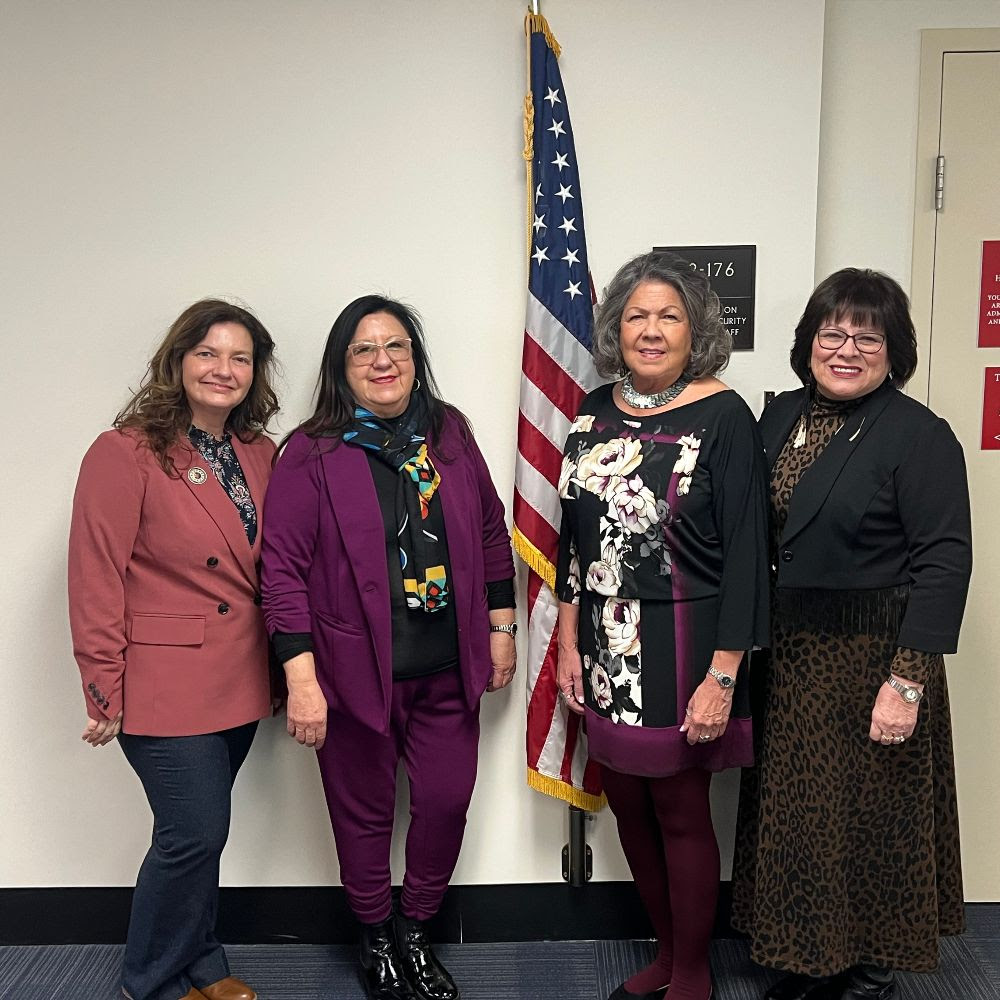
NAFOA met with staff from the U.S. House Committee on Natural Resources (pictured left to right: Interim ED Susan Masten; Secretary Melanie Benjamin; staffers Jocelyn Broman and Kristin Liddell; Treasurer Amy Minniear; 1st Vice-President VaRene Martin)
In a significant effort to advocate for the economic interests of Indian Country, members of the NAFOA Board of Directors recently visited congressional offices in Washington, D.C. In attendance were NAFOA 1st Vice President VaRene Martin (Thlopthlocco Tribal Town, Mvskoke (Creek) Nation), Board Secretary Melanie Benjamin, Chief Executive of the Mille Lacs Band of Ojibwe, Board Treasurer Amy Minniear, who also serves as Treasurer of the Pechanga Band of Indians, along with Interim Executive Susan Masten (Yurok Tribe).
Engaging directly with several House and Senate offices, they emphasized the crucial need for fiscal policies aligned with the unique needs of tribal nations. During meetings with the Democratic and Republican staff of the House Natural Resources Subcommittee on Indian & Insular Affairs, NAFOA discussed potential economic development opportunities necessary for Indian Country. The conversations also covered general and tribal tax legislative proposals and upcoming legislation from the 118th Congress that could significantly impact tribal governments and their members.
“Establishing relationships with members of Congress, regardless of party lines, is instrumental in advocating for Indian Country. Through bipartisan collaboration, we ensure our voices are heard and that the economic interests of tribes are prioritized. NAFOA’s commitment to building these crucial relationships reflects our dedication to fostering growth, stability, and prosperity for all tribal nations,” said 1st Vice President Martin.
Additionally, the Board met with staff from the Senate Committee on Indian Affairs (SCIA), centering discussions on various economic policies designed to create opportunities for tribal nations. NAFOA continued to advocate for simplifying and enhancing federal technical assistance and compliance procedures and emphasized the importance of recognizing the unique government-to-government relationship in formulating federal rules and guidelines. These strategic legislative engagements underscore NAFOA’s commitment to advocating for policies that actively empower tribal voices and contribute to the overall well-being of tribal communities.